Wednesday, May 15, 2013

Iona Institute's Accounts 2011

A few people have been asking me for Iona Institute's (Charity No: 17347) audited accounts since I mentioned them in blog posts discussing charities and political donations here and here.

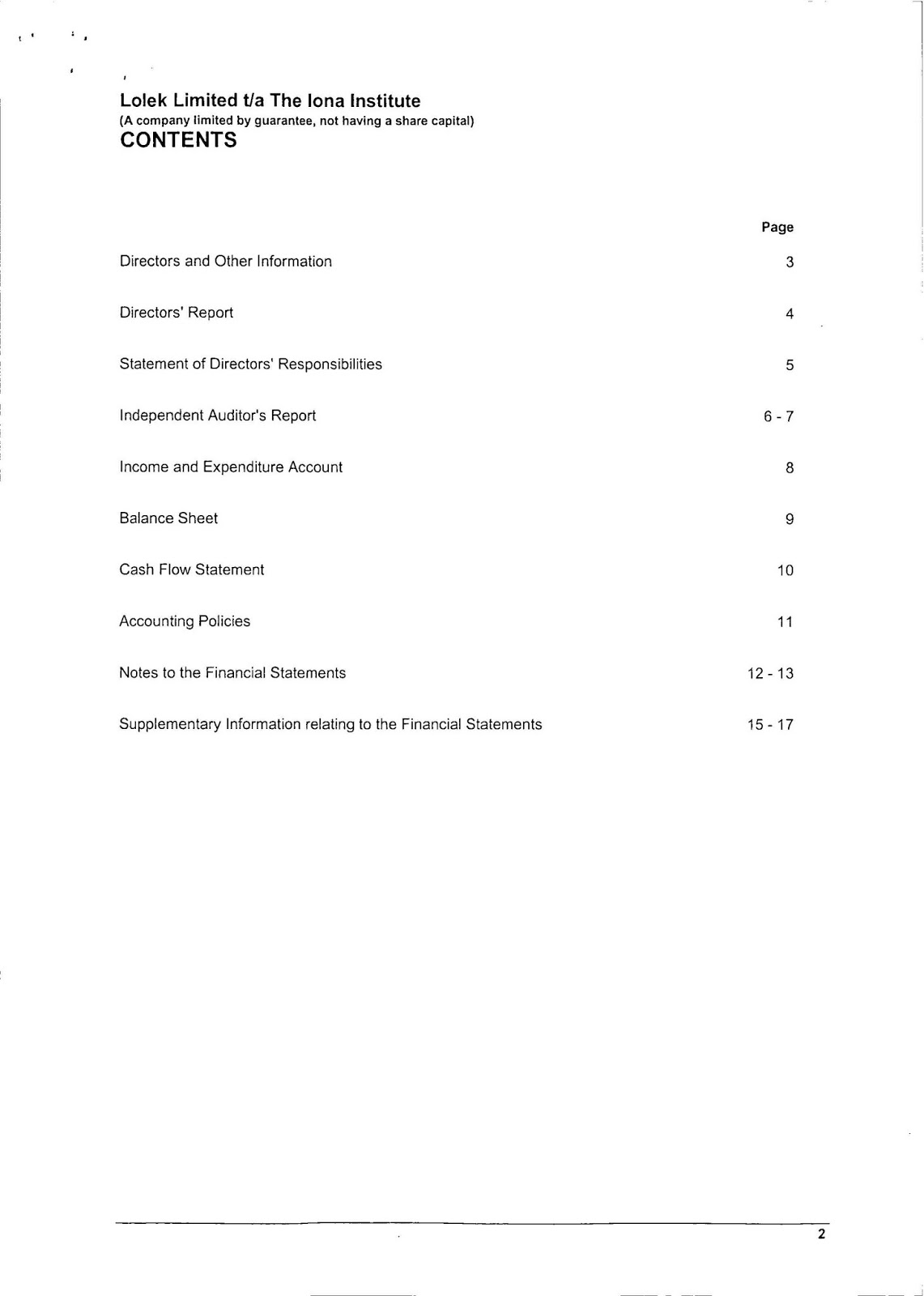
So here are The Iona Institute's audited accounts for 2011, as available to the public from the Companies Registration Office.

Any questions or comments I'd love to hear from you.


Monday, May 13, 2013

Charity Clothing Bins & 'The Agency Myth'

Full disclosure: I own a fundraising agency that charges a fee to carry out various services for various charities. But I acknowledge there are bad agencies and good agencies. There are agencies and suppliers that take the piss and there are agencies and suppliers that offer charities real value for money and can run an aspect of a charity's fundraising cheaper and better than the charity could do themselves.

This isn't about defending agencies, but it is about clarifying a misleading statement that seems to worm its way in to any report on any form of fundraising.: The majority of the revenue goes to the agency, not the charity.

In most cases this will be true, and if you don't really think too much about its meaning it can be shocking and disappointing. But it's misleading.

Take the recent coverage of charity bins: One article claimed that a clothes bank can generate €7,000 in a year, but the charity only received €150 in the year. This implies the private company running the clothes banks gets a whopping €6,850 or 98% of the revenue.

But what it doesn't talk about is costs. The costs in this example fall entirely on the private company running the bins - the cost of insurance, transport, wages, sorting, rent of space, waste disposal, tax, PRSI, etc. It's important to know the costs before a conclusion is made. If it costs €1,000 per year to maintain a clothes bank, well that seems a bit unfair. But what if it costs €6,800 per year to run a clothes bank? The company comes away with €50, the charity comes away with €150,

If the charity decided to bring the running of that clothes bin in-house they wouldn't be €6,850 per year better off. They would be €6,850 minus their new-found costs better off. They'd have to take on all the costs of running it...plus the risk.

Here are some interesting figures:
  • Eco-environmental (a private clothing bin company) recorded €30,000 profit in 2011 and a €23,000 loss in 2010. Average €3,500 profit.
  • ISPCC received about €76,000 per year from them (according to the Irish Times).

How many private companies do you know that donate 96% of their profit to charity?


Thursday, May 9, 2013

Case Study: Tax Shortfall Campaign December 2012

I believe 'tax shortfall' campaigns, conducted by telephone, can be the most cost-effective form of fundraising in Ireland. It surprises me how few Irish charities are doing these and so I wanted to share the results of one the small campaigns we ran in December 2012.

Looking at Charity X's database we found that they had 19 donors who were committed to giving €20 per month by Direct Debit and had been doing so for some time.

Approaching the end of 2012 it was clear that these donors were on track to have given €240 each in the calendar year - €10 short of hitting the tax-effective threshold of €250. We telephoned each of these donors in an attempt to secure a further €10 credit card donation over the phone and to also achieve an upgrade of their monthly donation to at least €21 per month.

We successfully contacted 10 people. 9 donors could not be contacted.

Of the 10 we saw 6 of them agree to process a one-off donation on the phone averaging €18. This ensure they all reached the €250 threshold in 2012. This is back before the consolidated tax-relief amount and so each of these donors would now be worth an additional €62.50 - €173.73 in tax-relief.

Of the 10 we also 7 people upgrade their monthly donation to an average €22 per month. Not only is this extra revenue in donations, but also eligible for tax relief in future years.

Of the 10 we saw 2 people say they would arrange it themselves and only 1 person said no.

The campaign also allowed us to update the donors on the charity's work and update contact details.


Campaign Summary:
Income (assuming donors go on to donate for 3 more years)
€110 in one-off donations
€396 extra in monthly donations after upgrades
€375-ish extra in tax relief for 2012
€2118-ish extra in tax relief for 2013-2015
Total: €2,999.00

Cost
€91.14 agency fee
€30-ish in fulfilment
Total: €121.14

ROI: 2475%


If you want to talk about how we can help you achieve this in 2013 then please contact me.

Tuesday, May 7, 2013

Should Charities Receive Tax Relief?

Irish charities and their donors are eligible to receive tax relief, including relief on Income Tax, Corporation Tax, Capital Gains Tax, DIRT, Capital Acquisitions Tax, Stamp Duty and Dividend Withholding Tax. This can be quite substantial: in 2010 over €30 million was paid out by Revenue on PAYE donations alone. Add self-assessed and corporate donors and you have a big chunk of our taxes.

The gut reaction is that this is justified - charities deserve as much help as possible and very often charities are providing services that the state should, and are doing so more cost-effectively.

So how does Revenue define charity?
"the body concerned is engaged in an activity under either one or more of the
following headings:

  • Relief of Poverty 
  • Advancement of Education 
  • Advancement of Religion 
  • Other works of a charitable nature beneficial to the community."

There are many that would object strongly to the funding of the advancement of religion, in the same way many would object to funding a charity promoting atheism. Essentially it comes down to a handful of people determining what is worthy and what isn't, and we only have our say through electing politicians we hope have the same beliefs.

In some cases the state is providing tax relief to organisations with contradictory views and policies, which could be interpreted as a government paying for people to debate, argue and undo each other's work.

And what if you don't agree with a charity's work? How do you feel that the tax you pay is going towards enabling this charity to run?

This becomes glaringly obvious when you look at a registered charity like Iona Institute. Promoting "the place of marriage and religion in society". This blog post isn't supposed to pass judgment on any charity or talk about my own beliefs/politics, so it's also important to point out that there would be charities on the other end of the spectrum. Great organisations working towards LGBT equality...there are individuals objecting to these. Similarly, some members of the public take issue with our government sending money abroad in aid. And the recent SpunOut controversy saw more conservative individuals furious at the charities approach towards education.

The fact is that whatever the charity and their cause there is an Irish tax payer who objects to their work and existence. And yet every Irish tax payer is partially funding these organisations through charitable tax relief.

Let's look at Iona Institute's most recent accounts. These aren't available on their website and at first glance are not available on the CRO website. But the Iona Institute is actually a registered charity named Lolek Limited ('lolek' is Polish for 'free man'). With an income of over €200k per year you could be looking at tax relief (funded by tax payers) at an amount of €20-30,000 each year. Many people would be happy for their taxes to be spent like that...but many people wouldn't.


Drilling down even further we can see where the Iona Institute is spending their money. 'Political donations' in 2011 caught my eye. Only €500, but still...IF Iona Institute is receiving tax relief from Revenue, then how do you feel about your tax going towards a charity making 'political donations'? And should they be eligible?

Anyone has the right to ask the question, should your charity be eligible for tax relief? And why?

In the charity sector we try to increase the relief the state gives and we campaign to see relief on VAT for charities. But are you able to vocalise why you are entitled to this relief? Can you show that you are benefiting the community? Can the tax relief you receive deliver a stronger impact than if the state had kept that money?

Thursday, May 2, 2013

What If Every Form Of Fundraising Had 'Solicitation Statements'?


Did you know in Northern Ireland face-to-face fundraisers are required to make a 'solicitation statement' at the point of sign-up? They must also disclose the 'notifiable amount' - the amount the charity pays the agency that employs them. It runs along the lines of:
“I am a professional fundraiser employed by Fundraising Ltd. on behalf of CharityAid. We expect to be paid approximately £200,000 in connection with this particular appeal, and the method used to determine our payment was calculated on the fixed cost of £200 per donor. We expect to raise at least £516,000 for the charity from this particular appeal."
There's no regulation like this down south yet, but we introduced our own declaration regardless, along the lines of:
“I am a professional fundraiser employed by Fundraising Ltd. and regulated by the 2009 Charities Act and the Irish Fundraising Forum for Direct Recruitment’s Code of Practice. The charity pays Fundraising Ltd. a fixed fee to undertake this public face-to-face fundraising work and to recruit long-term regular givers. This is one of the most cost-effective and efficient ways to raise funds.”
Regardless of what I think about having to declare the fees and costs and the wording of the statement, I began to think what other media would look like if they were subject to similar rules.

Mail
A declaration on the front of the envelope


Television
A banner declaration visible from the start of the ad.


Newspaper
Small print on every ad.
Although, to be comparable the small print would have to be at the top - the first thing visible.


Friday, April 19, 2013

Opening Direct Debit Dates - The Secret Fundraiser

In my 17 years of working I have had many different jobs and many different levels of pay. One thing has remained the same: the day before I get paid I have nothing left in my bank account.

The day I get paid I pay off a chunk of my credit card, pay any debts, and put some money in savings if I think I can afford it. And then a whole bunch of companies start to pillage my account. The Direct Debit and Standing Order Mafia start pulling everything they can out of my account over the course of the month: my electricity, my gas, my mortgage, insurance, pension, some weird stuff, and then...8 lovely charities.

There's no system. Little logic. Just the Bank Account Fairy making sure I finish on zero every month. But sometimes she messes up. Usually in January or if something breaks in my house or if Paul Theroux comes out with a new book or I get engaged or for a whole bunch of reasons. That's when Direct Debits start bouncing. And the later it is in the month, the higher they bounce.

That's why you need to be the first direct debit coming out of your supporter's account.

Most people in Ireland get paid in the last week of the month. And that's why the level of unpaids and attrition is lowest for charities that debit at the very beginning of the month.

But not everyone gets paid in the last week, and that's why you need to be able to debit any and every day of the month. And you need to get away from asking people what date they want to get debited (people are illogical) and instead ask them what date they get paid. And if someone's debit bounces you need to check in with them and make sure they haven't changed jobs and changed the date that they get paid.

I know what you're going to say: "We can't afford to debit every day of the month."

And I would say, "You can't afford NOT to debit every day of the month."

If you can reduce your unpaids and your attrition even by the tiniest of amounts (and you will) then it is worth paying someone to process these debits every day of the month. Think how much you're spending on recruitment of new donors. Think how much you're paying Irish banks for an 'unpaid'. Think of the energy you are putting in to retention.

Instead, make your finance people process the direct debits every day of the month.

If they refuse then make your CEO make your finance people process the direct debits every day of the month.

If they still refuse then offer to pay them cold, hard cash.

If they still refuse then hire someone part-time to process the direct debits every day of the month or outsource to an agency or do it yourself.

Your unpaids will reduce. You will increase your income.

You will be fundraising. Secretly.

Tuesday, April 16, 2013

Grafton Street Special Planning Control

Today Dublin City Council published proposed changes to the existing "'Scheme of Special Planning Control for Grafton Street & Environs'.

One of the key points in the document is that 'Charity Shops' would not be permissible as "they would detract from the character of the street". They define a charity shop as:

"A shop in which a charity sells used goods that are given to it, or in which they sell new goods, in order to generate an income for the work of the charity."

Now I understand why they would be against the sale of used goods but I am amazed at the explicit mention of new goods. Essentially they are specifying that any shop or establishment that is welcome on Grafton Street would no longer be welcome if they are generating income for charitable work. This to me seems like a (hopefully unintentional) attack on the charity sector.

Bryan Ward, a planner at the council, was quoted in last weekend's Sunday Times as saying, "We're not saying there are no places for charity shops in the city centre. We'd be quite happy to have them on some of the side streets."

I don't understand this disapproval of potentially high-class shops whose profits go towards the work of charity. This proposal is saying it's OK to sell clothes and toys and technology made in a sweatshop but if you're selling ethical goods whose profits go to charity then you're not welcome. I'm welcome to open an art gallery, a tailors or a barber as long as it's for personal profit. If I'm a charity and I want all the profits to go towards saving lives, well, I'm not allowed on the South Side's most dynamic retail experience. One could even argue that this wording prevents profit-making shops from selling items on behalf of charity.

It's another case of rewarding those that want to make personal profit but penalising those who want to do good. I am more welcome to make millions for myself and give a small percentage to charity rather than to make millions for charity and keep a small percentage for myself. All because of this taboo word 'charity'.

Thankfully they are welcoming submissions and observations to be made by June 13th 2013. I would encourage everyone in the sector and beyond to voice your concerns. 'Charity shops' needs to be removed or redefined or we could very well see this restriction rolled out on Grafton Street and beyond.

It is worth noting that Oxfam Ireland already have a shop, selling only new goods, in this area on South King Street. This document states that The Planning Authority have the power to
"serve a notice on each person who is the owner or occupier of land of measures required to be undertaken for the discontinuance of any use or the continuance of any use subject to conditions"
"Under this notice the Planning Authority must state they shall pay expenses that are reasonably incurred by that person."

Finally, the point may be made that charity shops could not afford space on Grafton Street anyway, but we have seen excellent locations been bequeathed to charities in the past. And frankly, if a business feels it makes financial sense to locate on Grafton Street then why would it not make sense for a charity to locate there? If anything, because of their access to volunteers, a Grafton Street location should be more affordable to a charity.


Map of the affected area.


You can read the full report here.
You can make your submissions/observations using this document.

Update: Apparently Oxfam on South King Street now sell secondhand goods, not just new goods. My apologies.